
Strait Talk: Uranium, Iran, and What’s Really at Stake in the Gulf
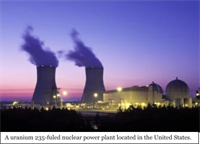
Iran has enriched uranium to 60%, a level with no credible civilian purpose, and perilously close to weapons-grade. Here’s what every mariner, client, and concerned citizen needs to know.
I spend much of my days thinking about admiralty law — cargo and vessel disputes, Jones Act claims, and the ever-changing tides of maritime commerce. But right now, the whole world is watching a geopolitical drama that touches one of the most consequential locations in global shipping: the Strait of Hormuz. At the center of that drama is the power of uranium.
Let me break this down for you, no physics degree required.
1. What Is Uranium?
Uranium is a dense, naturally radioactive metal found in low concentrations in rocks, soil, and even seawater. About 90% of the world’s uranium is produced in just five countries: Kazakhstan, Canada, Namibia, Australia, and Uzbekistan.
Unrefined uranium is the raw material mined from the ground which needs extensive processing before it becomes useful. Naturally occurring uranium is composed of three major isotopes: uranium-238 (making up about 99.27% of natural uranium), uranium-235 (about 0.72%), and uranium-234 (a tiny trace amount). Of these, uranium-235 is the only one that is fissile with thermal neutrons, meaning the isotope can sustain a nuclear chain reaction powering both reactors and weapons.
2. What Is Uranium Used For?
In a civilian nuclear power plant, the chain reaction is controlled. Nuclear power plants currently produce 9% of the world’s power. Another vital civilian use is for producing isotopes used in nuclear medicine for the diagnosis and treatment of various diseases.
So uranium isn’t just about weapons. Nuclear power supports cities, and helps treat cancer. That same raw material, depending on how it’s processed, can be one of humanity’s most beneficial technologies or its most destructive weapon; that is the central tension of the Iran story.
3. What Is “Enrichment”?
To “enrich” uranium means taking the naturally-found element and increasing the proportion of uranium-235, while removing uranium-238.
The uranium found in nature contains only 0.7% of the chain-reacting isotope uranium-235, which is useful in weapons and for fueling civilian reactors, while 99.3% is uranium-238, which is not useful. Centrifuges spin at enormous speeds and the heavier isotope, U-238, moves to the outside and is removed, leaving a higher concentration of U-235 behind.
4. What Enrichment Level Is Needed for What Purpose?
This is the critical chart the news never quite explains clearly:
- Natural uranium: ~0.7% U-235. Barely useful for anything without processing.
- Reactor-grade (LEU): 3–5%. Most civil and commercial nuclear reactors use low enriched uranium (LEU) at about 3–5% uranium-235.
- Research reactors / advanced SMRs: up to ~20%. Highly Enriched Uranium (HEU) is more than 20 percent U-235, used primarily in naval propulsion reactors (such as nuclear submarines and large ships) and some research reactors.
- Weapons-grade: 90%+. States with nuclear weapons typically use weapons-grade HEU at 90% or above to minimize weapons’ size.

The 20% threshold is a crucial legal and practical dividing line. Enriching uranium to 20% represents about 90% of the effort needed to produce weapons-grade fissile material. Once a proliferator reaches this threshold, it could be ready to weaponize in a relatively short time.
5. How Hard Is Enrichment, and How Is It Done?
Enriching uranium is both technically difficult and expensive, as it requires separating isotopes that have very similar chemical and physical properties. Consequently, the enrichment process is the main barrier to producing uranium suitable for use in nuclear weapons.
The process commercially used in the United States today is called “gas centrifuge enrichment.” Uranium hexafluoride gas is spun in a centrifuge machine, separating the slightly lighter U-235 from the heavier U-238. Because the mass difference is tiny, many thousands of centrifuges must be linked together in chains called “cascades” to gradually increase the U-235 concentration.
There are no technical barriers to prevent countries with enrichment capabilities from using them to enrich uranium to weapons levels — only legal prohibitions. The same hardware that makes reactor fuel can make bomb material; you simply reconfigure the cascades and keep spinning.
6. What Level Does Iran Have Now?

So, why the cause for alarm?
Iran began breaching limits imposed by the Joint Comprehensive Plan of Action (JPCOA) or Iran Nuclear Deal in 2019, which had imposed limits on Iran’s uranium production in exchange for the removal of U.S., E.U. and U.N. sanctions (the U.S. had withdrawn from the deal in 2018). Iran’s advances included enriching uranium to 60% (a level close to weapons-grade that has no practical civilian application) and deploying advanced centrifuges that enrich uranium more efficiently.
According to the International Atomic Energy Agency (IAEA), it is actually easier to go from 60% to 90% than it was to reach 60% in the first place, because there is less uranium-238 left to remove. The IAEA believes Iran has about 440kg of uranium enriched to 60%, enough to theoretically build 10 or 11 low-technology atomic bombs if refined to 90%. As of late 2024, Iran can produce enough weapons-grade uranium for 5–6 bombs in less than two weeks.
7 & 8. What About “De-Enrichment” (downblending)? Can Iran Do It?
Yes — downblending is technically straightforward and is very much on the table in current negotiations. The process involves mixing stocks with depleted uranium to achieve a lower percentage of enriched U-235 overall. In the current negotiations, Iran has said it is willing to “downblend” its 60% enriched uranium to about 20%.
However, the question is whether Iran will follow through, and whether downblending alone is sufficient, or whether the U.S. will demand physical removal of the stockpile from Iranian territory altogether. Under a compromise proposal currently under discussion, some of the highly enriched uranium would be shipped to a third country (not necessarily the U.S.) and some of it would be downblended in Iran under international monitoring.
There’s an important caveat, however: Iran has gained knowledge from these activities that cannot be fully reversed. You can dilute the material, but you can’t “un-ring the bell” of technical expertise.
9. If Iran Won’t De-Enrich, What Are the Options?
This is where maritime attorneys like me start paying close attention, because controlling the movement of nuclear material, or stopping it, has an ocean shipping dimension.
A top priority for the Trump administration is ensuring Iran cannot access the stockpile of nearly 2,000 kg of enriched uranium buried in its underground nuclear facilities, in particular the 450kg enriched to 60% purity. The U.S. has pushed for Iran to ship the material out entirely; Iran has resisted.
Military strikes have already played a role. The seven declared facilities assessed as having been affected by military attacks include the Fordow Fuel Enrichment Plant, the Fuel Enrichment Plant, the Pilot Fuel Enrichment Plant, and several others. However, Fordow in particular — a deeply buried facility — is more challenging to destroy with conventional military strikes, further increasing proliferation risk.
10. The International Legal Framework: The NPT and the IAEA
Now we’re in my professional wheelhouse — treaties and international law.
The cornerstone document is the Treaty on the Non-Proliferation of Nuclear Weapons (NPT). Opened for signature in 1968 and in force since 1970, with 191 States as signatory parties, it is the most widely adhered-to treaty in nuclear non-proliferation. Under the NPT, non-nuclear-weapon states have committed themselves not to manufacture or acquire nuclear weapons.
The watchdog is the International Atomic Energy Agency (IAEA). Under Article III of the NPT, the IAEA administers international safeguards to verify that non-nuclear-weapon States fulfill their non-proliferation commitments, “with a view to preventing diversion of nuclear energy from peaceful uses to nuclear weapons or other nuclear explosive devices.” Iran is an NPT signatory, and is therefore legally obligated to cooperate with the IAEA.
11. Who Controls the IAEA?
The IAEA’s policy-making bodies comprise the General Conference of all Member States and the 35-member Board of Governors. The General Conference convenes annually in Vienna. The IAEA is not under the direct control of the UN, but reports to both the UN General Assembly and Security Council.
Critically, the Board’s effectiveness is limited by geopolitics. Political divisions among member states (evident in Board votes splitting along lines like Russia and China opposing censures) often hinder decisive action, even as IAEA evidence from environmental sampling and satellite imagery supports proliferation concerns.
12 & 13. Will Iran Follow IAEA Guidelines? And What About Inspectors?
The short answer: Iran’s compliance has deteriorated dramatically, and the inspection regime has broken down.
In February 2021, Iran halted more intrusive verification measures required by the JCPOA, including the Additional Protocol that expanded IAEA access to information and sites. Things went from bad to worse in mid-2025, as attacks on several of Iran’s nuclear facilities taking place between June 13–24, 2025 caused the Agency to stop all verification activities. By the end of June 2025, all IAEA inspectors had withdrawn from Iran for safety reasons. On July 2, 2025, Iran enacted a law suspending cooperation with the Agency altogether.
The E3 (France, Germany, and the UK) summarized the situation bluntly in March 2026: the IAEA has been unable to access several of Iran’s nuclear facilities, including those that pose the greatest nuclear proliferation risk, and has been unable to account for Iran’s stockpile of enriched uranium for more than eight months. This marks a continuing failure on Iran’s part to adhere to basic safeguards obligations.
14. What Happens If Iran Doesn’t Comply?
In case of non-compliance with IAEA safeguards, the Board of Governors calls upon the state to remedy the situation and reports non-compliance to the UN Security Council and UN General Assembly. The IAEA Board has found six states in non-compliance with their safeguards agreements in its history: Iraq, Romania, North Korea, Libya, Iran, and Syria.
On June 12, 2025, the IAEA Board of Governors formally found Iran in noncompliance. The UN Security Council can then impose sanctions, but Russia and China hold veto power there, which limits how far that mechanism can go.
Beyond the legal machinery, the current U.S.–Iran negotiations represent a parallel track. President Trump has set several red lines, including that Iran freeze its uranium enrichment and surrender its stockpile of near-bomb-grade material. Iran, for its part, has offered to permanently halt high-level enrichment, restore IAEA inspections, and implement the Additional Protocol, provided the United States lifts further sanctions.
As of this writing, negotiations are tentative, ongoing, but fragile. The stakes for global shipping, regional stability, and the non-proliferation regime itself could not be higher.
I’ll be watching closely — and so should you. Stay safe out there.
We at the Herd Law Firm are proud to fight for seamen, maritime workers and passengers in all types of personal injury and death claims. As maritime personal injury attorneys (and sailors ourselves!) located in northwest Houston, we never waver in our commitment to help these maritime workers, passengers, and their families when they are injured or mistreated.
Sources
1. World Nuclear Association — “Uranium Enrichment.” https://world-nuclear.org/information-library/nuclear-fuel-cycle/conversion-enrichment-and-fabrication/uranium-enrichment
2. Nuclear Threat Initiative (NTI) — “Uranium Enrichment.” https://tutorials.nti.org/nuclear-101/uranium-enrichment/
3. Union of Concerned Scientists — “Fissile Materials Basics.” https://www.ucs.org/resources/fissile-materials-basics
4. Wikipedia — “Enriched Uranium.” https://en.wikipedia.org/wiki/Enriched_uranium
5. U.S. Department of Energy — “Uranium Enrichment, Explained.” https://www.energy.gov/ne/articles/uranium-enrichment-explained
6. Center for Arms Control and Non-Proliferation — “Uranium Enrichment: For Peace or for Weapons.” https://armscontrolcenter.org/uranium-enrichment-for-peace-or-for-weapons/
7. Australian National University / The Conversation — “What is uranium enrichment and how is it used for nuclear bombs?” https://research.anu.edu.au
8. Al Jazeera — “What is uranium enrichment and how quickly could Iran build a nuclear bomb?” https://www.aljazeera.com/news/2026/4/22/
9. Arms Control Association — “The Status of Iran’s Nuclear Program.” https://www.armscontrol.org/factsheets/status-irans-nuclear-program-1
10. IAEA Board of Governors — GOV/2026/8; GOV/2025/53; GOV/2025/65; GOV/2025/50. https://www.iaea.org/
11. Congressional Research Service — “Iran’s Nuclear Program: Tehran’s Compliance with International Obligations.” https://www.congress.gov/crs-product/R40094
12. UK Government / E3 Statement — “Implementation of the NPT Safeguards Agreement and UNSC Resolutions in Iran,” March 2026. https://www.gov.uk/government/speeches/
13. Arms Control Association — “IAEA Safeguards Agreements at a Glance.” https://www.armscontrol.org/factsheets/iaea-safeguards-agreements-glance
14. IAEA — “The NPT and IAEA Safeguards.” https://www.iaea.org/bulletin/the-npt-and-iaea-safeguards
15. NTI — “Treaty on the Non-Proliferation of Nuclear Weapons.” https://www.nti.org/education-center/treaties-and-regimes/treaty-on-the-non-proliferation-of-nuclear-weapons/
16. Wikipedia — “2025–2026 Iran–United States negotiations.” https://en.wikipedia.org/wiki/2025%E2%80%932026_Iran%E2%80%93United_States_negotiations
17. Axios — “U.S. considers $20 billion cash-for-uranium deal with Iran.” https://www.axios.com/2026/04/17/iran-us-deal-20-billion-frozen-funds-uranium
18. CNN — “A deal to end the Iran war seemed close…” https://www.cnn.com/2026/04/20/politics/social-media-posts-trump-iran-deal
19. Arms Control Association — “U.S. Negotiators Were Ill-Prepared for Serious Nuclear Negotiations with Iran.” https://www.armscontrol.org/blog/2026-03-11/
20. IAEA — “Governance.” https://www.iaea.org/about/governance